
One of the persistent assumptions in the UK planning debate is that viability can be stabilised through tighter rules. Cap developer profits. Standardise appraisal assumptions. Limit flexibility. The logic is straightforward: if the planning system can constrain returns, it can maximise public value.
In theory, perhaps. In practice, the housing market does not operate in a stable environment where inputs, financing costs and sales rates remain constant. It operates in a world of shocks. And every few years those shocks arrive in a form that viability guidance could never have anticipated.
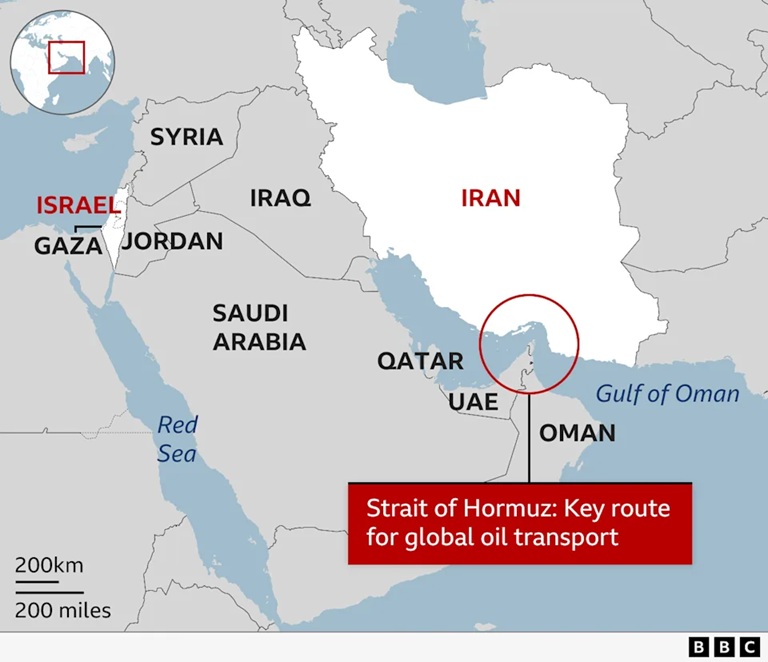
The latest example is geopolitical rather than financial. The conflict involving Iran has already sent energy markets into renewed volatility. Roughly 20 per cent of global oil and gas flows normally pass through the Strait of Hormuz, and disruptions there have pushed oil prices sharply upward and injected new inflationary pressure into global supply chains.
For the UK construction industry, the consequences are immediate rather than theoretical. Energy-intensive materials such as steel, concrete and glass are directly linked to global fuel prices. Analysts have warned that rising oil and gas costs triggered by the conflict could feed rapidly through to building material prices and wider construction costs.
These kinds of events are sometimes called “black swans”: unpredictable shocks that reshape markets overnight. The housing development model is particularly exposed to them because of its long timelines. Land is purchased years before construction begins. Planning permission is negotiated under one set of economic assumptions. Delivery then occurs under another.
Yet the planning system often behaves as if those assumptions are fixed. More so since former Deputy Mayor for London James Murray’s wide ranging reforms to the London viability planning frameworks sort to peg land values to existing use, cap profits and standardise assumptions. Murray’s approach is now being consulted nationally with the latest NPPF consultation on viability reforms.
The debate around profit caps in viability guidance illustrates the problem. Many policy frameworks implicitly assume that developer profit should sit within a narrow band — typically around 15–17.5 per cent of gross development value. Anything above that is seen as excessive. Anything below is treated as acceptable.
But development profit is not simply a reward. It is also a buffer against risk. That risk is real.
Housing projects face a unique combination of uncertainties. When one of its inputs shifts — as energy markets are now doing — margins compress rapidly. The capital markets will be already repricing. Investment decisions may be elongated, postponed or pulled.
Recent events also underline how quickly events move. The Iran conflict has already pushed up transport and energy costs across the UK economy, mortgage rates are nudging up and the BoE is unlikely now to cut the base rate. If sustained, those pressures will ripple through into housing demand in the coming months.
This is precisely the kind of environment in which rigid profit assumptions begin to fail. A scheme that appeared viable when oil was stable, borrowing costs were falling and material prices predictable can become marginal within months. A capped return then becomes indistinguishable from a negative one.
The planning system’s response is often to insist that obligations remain unchanged. Indeed the GLA has pushed hard to retain late stage reviews although it seems inconceivable that they will last into the next political cycle. Affordable housing commitments, infrastructure payments and policy requirements are treated as fixed points in an otherwise shifting landscape. Yet when external shocks move the economics of a scheme, that rigidity does not protect public value. It prevents delivery altogether.
We are moving into a world of an AI/drone arms race as predicted by Juliet Samuel in the Times today. It’s worth a read but actually she is incorrect. The race began probably three years ago and what we are seeing is technology moving at a pace risk cannot price and therefore capital markets can no longer price. All it takes is for one drone strike to be successful in the straits of Hormuz for our capital markets to feel the ripple.
Those shocks will get greater. Risks previously in the domain of science fiction such as drone swarming are becoming a hard reality of the future world.
Profit caps and rigid viability benchmarks belong to a world where development economics could be forecast with reasonable confidence. That world no longer exists and the GLA and the Government must catch up. The reality we are heading too without radical simplification is one where public land with contractor framework deals will be the only housing that can be built. That means very little.
If the objective of planning policy is to maximise housing delivery while securing public value, it must recognise that flexibility is not a concession to developers. It is an acknowledgement of uncertainty.
Because when the next black swan arrives — whether geopolitical, financial or AI driven — the schemes most tightly constrained by planning theoretical margins will be the first to stop building. And the homes they might have delivered will disappear from the pipeline long before any viability spreadsheet has time to adjust.