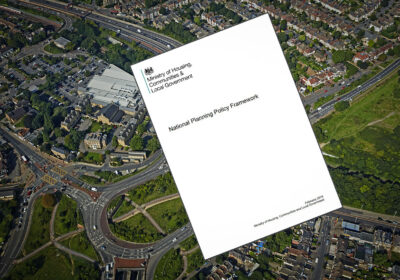


If Westminster’s rumour mill is to be believed, the new National Planning Policy Framework and the long-promised National Development Management Policies will finally emerge this week. Matthew Pennycook could well be giving these documents a final review, which in Whitehall usually means the environmental lobby has arrived at the gates, waving spreadsheets of bat data and demanding further concessions.
The critical question is not whether the punctuation is correct or whether the pages are neatly indexed. The question is whether Labour has already capitulated: whether NDMPs – originally promised as a groundbreaking, statutory toolkit to bring clarity and predictability to our dysfunctional planning system – are about to be watered down into yet another vague, non-statutory pamphlet designed to appease the Environmental Audit Committee and its well-organised circle of professional objectors.
This matters because NDMPs were meant to be the backbone of a new approach: clear national rules that councils could rely on and developers could trust. Binding instructions, not polite suggestions. A foundation for certainty. But as the chorus of “nature is not a blocker” grows louder from those who have spent decades blocking almost everything, one cannot escape the suspicion that Pennycook’s resolve may be weakening.
The EAC’s recent intervention is a case in point. The Committee accused ministers of promoting a “lazy narrative” that environmental protections slow down housebuilding. This would be amusing if it were not so disingenuous. Nature is not the blocker. Nobody believes that. But people claiming to speak on nature’s behalf while opposing every actual project most certainly are.
The EAC’s position is exquisitely convenient: declare that nature poses no obstacle, then quietly maintain the system that allows campaigners to weaponise environmental assessments, tree surveys, heritage appraisals and legal challenges to frustrate development for years.
It is a masterclass in misdirection. The problem isn’t ecology. The problem is a planning regime that elevates paperwork above people. A regime that treats even urban brownfield sites as if they are fragments of Eden. A regime in which objections citing “local character” or “loss of views” routinely trump homes for nurses, builders, and young families simply trying to live near work.
Yet these are the voices now setting the tone for government policy. And if Labour caves, if NDMPs are rendered non-statutory, or delivered as a 30,000-word behemoth with enough sub-clauses to keep the consultant-industrial complex in champagne for a decade, then the truth will be unmistakeable. The government has chosen to placate the anti-development lobby instead of solving the nation’s housing crisis.
This is not an academic dispute. It has direct consequences for the lives of millions. The country is already trapped in a perfect storm of scarcity, rising costs, and falling confidence. Developers and investors are openly signalling their concerns. According to recent polling, more than three-quarters of property investors have no confidence that Labour’s reforms will actually lead to more homes being built.
They are responding rationally to a deteriorating economic backdrop: the OBR has downgraded future disposable incomes and revised inflation expectations upward. Stamp duty remains unreformed. A new “mansion tax” on properties over £2 million threatens to choke liquidity in precisely the parts of the market that fund redevelopment. None of this encourages risk-taking or long-term planning.
If NDMPs are neutered now, the result will be simple: fewer approvals, fewer commencements, fewer completions. Every year of delay pushes more people onto housing waiting lists already swollen to historic levels. Every stalled scheme adds millions to the housing benefit bill, as the state is forced to subsidise sky-high private rents because the social housing pipeline is chronically anaemic. The public purse bleeds because the planning system refuses to yield.
Labour’s target of 1.5 million homes, already far too modest for a country that needs at least twice that figure given long term vacancy rates are barely scratching one per cent, will vanish into thin air if decision-making remains as inconsistent and discretionary as it is today.
It is not enough to declare an ambition. A planning system built to stop development cannot be coaxed into delivering it merely by reciting slogans about “spades in the ground.” Investors do not respond to rhetoric. They respond to rules.
That is why NDMPs must be statutory, streamlined and sovereign. Not caveated, not softened, not merely “material considerations”, but binding, predictable rules that finally strip away the labyrinth of local veto points.
For years, planning has rewarded obstruction and punished initiative. For Britain to grow again, that dynamic must be reversed.
There is an easily achievable case the investors would welcome. A pro-worker, pro-market case. Housing is not simply a commodity; it is the bedrock of prosperity and mobility. Lower-income workers suffer the most from high rents and scarce supply. Productivity is throttled when people cannot afford to live near jobs. Family formation collapses when young people are trapped in shared flats into their thirties. A planning system that restricts supply is not environmentally virtuous; it is economically regressive.
The environmental lobby insists that nature is not a blocker. Very well. Let them prove it by supporting NDMPs with teeth. If they truly believe the natural world and new homes can coexist, then they should welcome a system that provides clarity, reduces appeals, and channels investment into well-planned, sustainable sites.
But we all know they will not. Their campaign depends on uncertainty. On ensuring each scheme must be fought anew, inch by inch, consultation by consultation, until most developers simply give up.
Pennycook therefore faces a stark choice this week. He can deliver the statutory NDMPs Labour promised. One that is clear, concise, and capable of shaking the planning system out of its government induced deadlock.
Or he can placate the EAC and its orbit of obstructionists, offering instead a non-statutory compromise destined to produce more delay, more expense and more disappointment.
One path builds homes. The other builds waiting lists.
Britain must decide which future it wants.
Chris Worrall is a prominent housing campaigner and former editor of Left Foot Forward. He an Industry Fellow at the thinktank Onward.