

It was around 13 years ago I joined Essential Living at the inception of one of the UK’s first, ground up, build to rent developers. The idea, backed by the Washington State Pension fund, was to marry institutional capital with the development system to create a high quality, middle market build to rent offer.
Up to that point, rental housing was mainly considered to be portfolios of homes assembled by landlords. Ideas which married convenience, quality, stability and community were longed for, but for the UK had been elusive.
It was becoming increasingly apparent that relying just on buildings for sale would not meet the needs of a modern flexible economy or the requirements to get more housing built quickly in our towns and cities. Flats just take a long time to sell unless they have demand support such as Help to Buy and affordability and viability were under pressure even ten or so years ago.
Thanks to a handful of advocates, stalwarts such as Nick Jopling, the needle was threaded between long term capital and property development. Vanguards such as Hub and Grainger started to make it work and suddenly the success that other countries on mainland Europe and the United States enjoyed in creating high quality rental homes looked possible.
I only stayed a short time at Essential but I could see the inherent advantages of such platforms. Backed by long term capital, institutional landlords would bring stability and quality to renters and our towns and cities. The future looked bright.
Ten years on
We’ve come along way in ten years. Build to rent is now an established tenure in the UK and is recognized by most as an important part of the housing offer.
According to CBRE’s Mid Year outlook, build to rent investment has remained broadly stable at £1.9 bn. Increasing investment volumes look likely over the coming years.
Bidwells, who have assembled an excellent team around the operational living space, are on the button when it comes to the nature of that investment.
The bar graph below displays how capital is flowing out of what’s known as multi-family rental – flatted schemes – and instead investing into rental housing, otherwise known as single family.
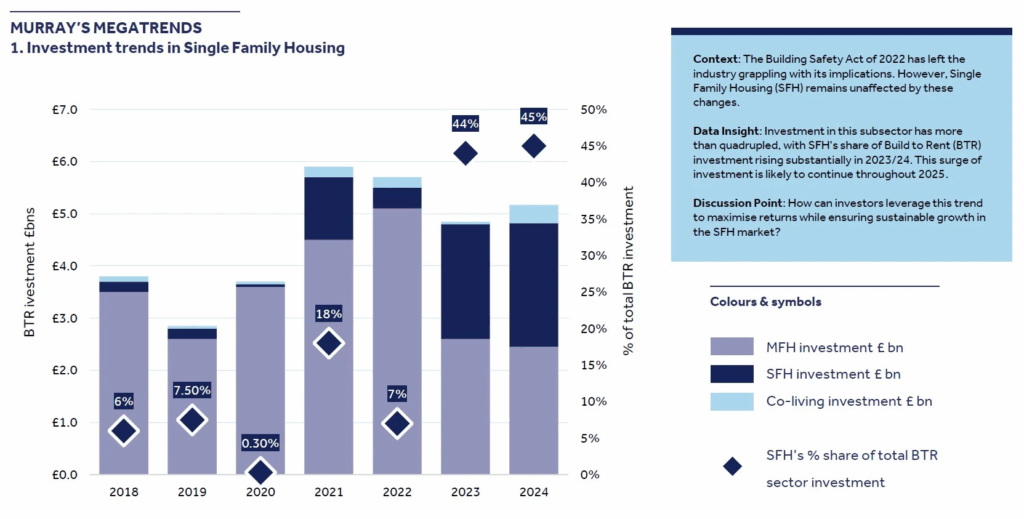
Single family housing is now the darling of the rental family. Lower risk and chronically underserved, it’s where capital wants to be as demonstrated by the chart.
But whilst there will be winners, this is not good news for our towns and cities. Molior has stepped forward to show just how bad things are for flatted rental in cities like London.
According to their analysis, not a single scheme was started in 2025 despite the city being gripped by a rental crisis. The line graph below shows just how bad things are:
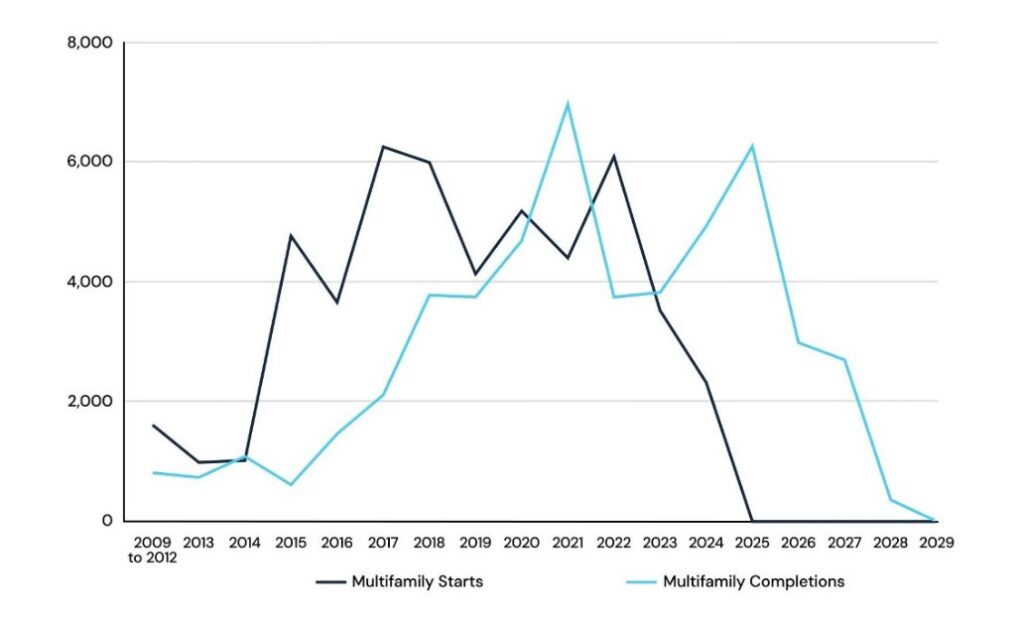
The consequences are the brakes are firmly on for inner-city, high-density development. But this shouldn’t be an either or.
There is enough investment capital out there, the fact it is willing to invest in single family housing shows the appetite for real estate investment remains. It means there are specific problems with multifamily that need addressing.
What must happen now
This is a brownfield housing problem made worse by the particular characteristics of build to rent as a tenure and its vulnerability to debt pricing. I’ve written recently about the issues facing brownfield development in cities such as London.
Build to rent is more or less treated as a cash cow by various planning capture tools available at a local and regional level. It is expected to carry the full costs of London Community Infrastructure, now in some parts aggregating to upwards of £100k a unit and also be required to deliver affordable housing.
If we wish to attract capital back into our cities and want to get scalable development then something must give. Middle market, flatted rental is by its very nature affordable and the more of it, the better. In lieu of a 10 year covenant that keeps the tenure as rental, planning authorities should not overly intervene in this tenure but create a simple framework of rules to allow the sector to return to growth.
Rental led development should be supported for what it is, not treated as a cash pump to fill gaps in local funding. Resource local government properly and keep the rules simple and we should not have to suffer these huge interruptions in what should be a trajectory to success and growth.