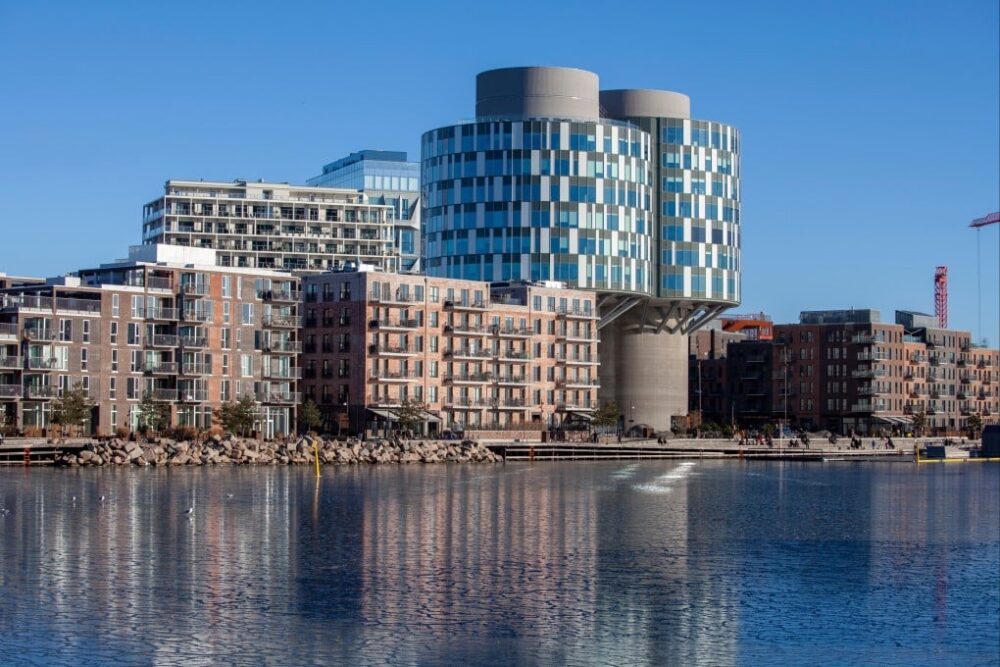

As the UK renews its ambition to deliver a new generation of towns, there is understandable pressure to get them right. These places must not only address the chronic need for housing, but also set a new benchmark for liveability, sustainability, and economic resilience. Rather than looking solely inward for inspiration, we can gain valuable insight from Copenhagen a city that, over the last two decades, has delivered two of Europe’s most sophisticated urban extensions Nordhavn and Ørestad. I visited these neighbourhoods in the springtime and they made a real impression on me in terms of the quality and foresight involved.
These districts stand as compelling examples of modern mixed-use neighbourhoods that are connected, environmentally progressive, and designed at a human scale. Their success offers key lessons for the UK as it seeks to build communities that function as more than just places to live, but places to thrive.
Perhaps the most striking feature of both Nordhavn and Ørestad is how deliberately they embody the principles of the five-minute city. Nordhavn is a former industrial harbour now being transformed into a district for approximately 40,000 residents. It also plans as many jobs and daily needs are intentionally placed within a short walk: shops, schools, workspaces, healthcare facilities, cultural venues, and green areas are all designed to sit comfortably within residents’ immediate surroundings. This is not an abstract planning slogan — it is a lived reality reinforced by carefully curated building densities, generous public spaces and a layout that favours people over vehicles.
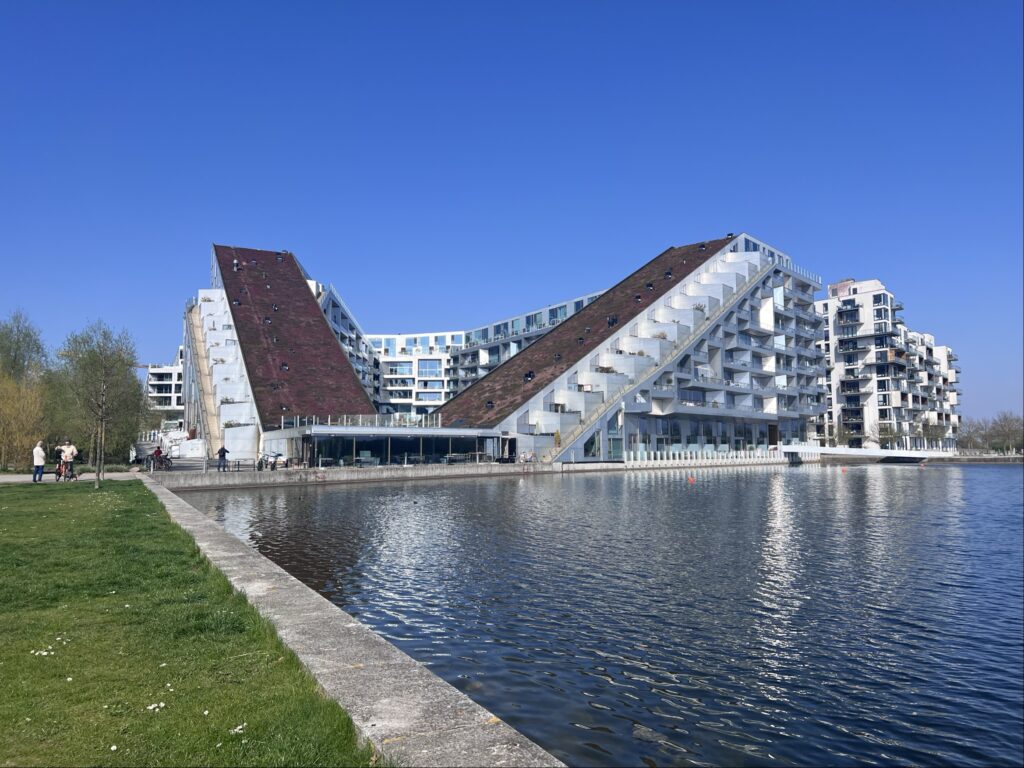
Ørestad similarly integrates everyday services into the rhythm of its neighbourhoods. Its four districts combine housing, workplaces, educational institutions and leisure amenities in a way that avoids the pitfalls of mono-functional zoning. One of its most celebrated buildings, the Ørestad School and Library, doubles as a community hub, making education and social life part of the public realm rather than tucked away in isolated compounds. The result is a place where families, workers, students and visitors all share a sense of ownership.
Both of these Copenhagen districts illustrate a mindset the UK would do well to adopt. Transport is not an afterthought it is the backbone of development.
In Ørestad, the metro arrived with the first phases of construction. Uniquely, the metro was partially funded through land sales within the district, demonstrating an approach to land value capture that prioritises infrastructure first and singularly rather than the UK shopping list approach. The presence of fast, reliable transit from day one fundamentally shaped the development’s character walking, cycling, and public transport became the natural choices, while private car dependency diminished organically.
Nordhavn carries this model forward with its own metro stations and a future expansion of the metro line. Beyond rail, it weaves together a network of cycling green loops, generous pedestrian routes, and low-parking standards that encourage soft mobility. The effect is a district where movement feels intuitive, clean, and equitable a far cry from many car-oriented UK new towns of the past Milton Keynes being a case in point.
If the UK wants to break the pattern of building housing first and retrofitting infrastructure decades later, Copenhagen’s new towns provide a clear precedent: invest early, reap long-term social and economic returns.
One of Nordhavn’s most distinctive qualities is how innovation is built into the district itself. The EnergyLab Nordhavn project, for example, transforms an entire neighbourhood into a living testbed for smart energy systems, integrating district heating, renewable energy generation, energy storage, and real-time digital management. It demonstrates how a new town can be designed not only to minimise carbon emissions but to pioneer future energy models.
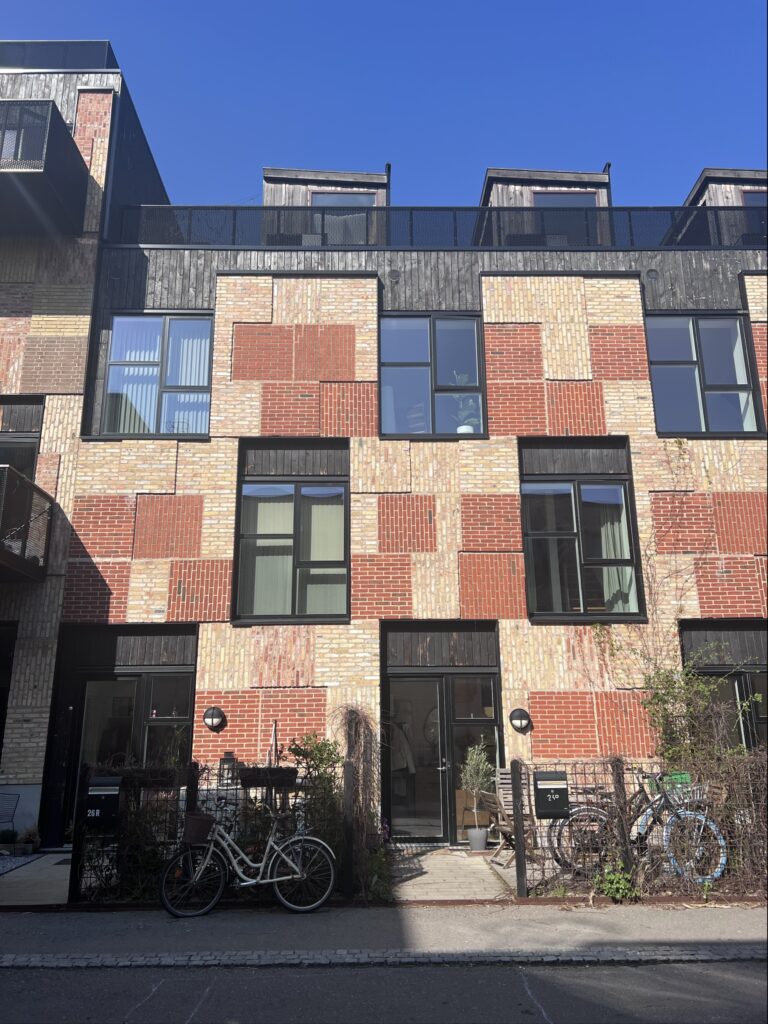
Ørestad likewise showcases how architecture and landscape design can contribute to environmental performance. Canals, green corridors, and water basins structure the entire district, ensuring that nature is not an afterthought but a defining force in shaping streets, buildings, and public life. Green roofs, energy-efficient buildings, and carefully calibrated density make sustainability a daily experience rather than a marketing label. Resource Rows in particular, built from upcycled brick and concrete waste, transforms demolition materials into high-quality architecture showcasing circular construction at scale. It proves that sustainable buildings can be both beautiful and viable.
Another lesson for us is the governance structure behind these developments. Both Nordhavn and Ørestad are delivered through long-term, publicly owned development corporations that control land, reinvest profits, coordinate phasing, and maintain strategic oversight. This allows development to unfold incrementally, in manageable phases, while ensuring consistency in quality and vision.
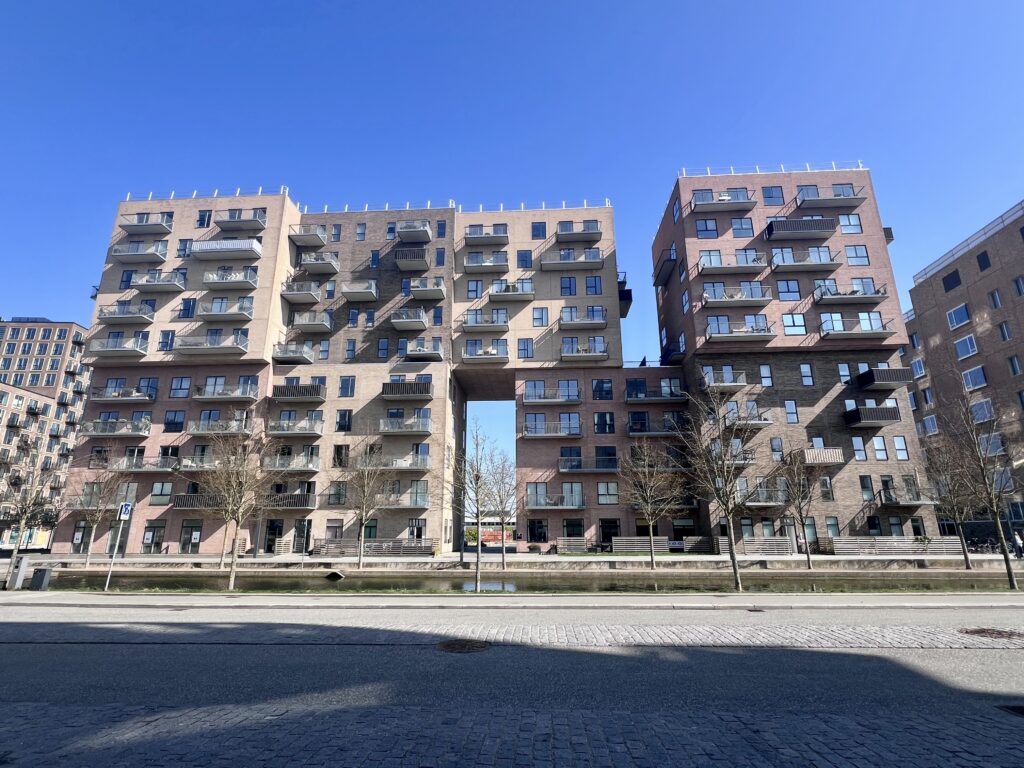
Nordhavn in particular grows islet by islet, each new area connected to transit, services, and public space before the next begins. This prevents the piecemeal, fragmented growth that sometimes plagues UK schemes where infrastructure lags behind housing, and amenities emerge only after community pressure.
Copenhagen’s new districts are not without criticism. High land values have led to concerns about affordabilityand some observers note a sense of architectural polish that can feel sterile compared with older, organically grown urban areas. These challenges are important to acknowledge because they highlight a key risk for our new towns: building high-quality neighbourhoods is not enough — they must also be socially inclusive and culturally vibrant.
Yet these critiques do not diminish the achievements of Nordhavn and Ørestad. Rather, they offer useful watch points that can inform more balanced and inclusive UK development policies.
Paraphrasing the words of Jan Ghel ‘Architecture and urban design has an enormous impact on patterns of life in a city. Yes, we form the cities but then the cities form us.’ UK’s[NC1] new towns have the opportunity to build places for people where transport supports development rather than chasing it, where daily life is made easier and sustainable through design, and where public spaces, institutions, and communities form the backbone of long-term success.
Copenhagen has already tested many of the ideas the UK aspires to. The question now is whether we have the ambition and the governance models to apply them with the same clarity and conviction.