
It is now increasingly clear that this conflict is not a short-lived shock despite the American President’s erratic social media activity sometimes suggesting otherwise. Recent commentary on Iran’s military doctrine highlights why. Rather than relying on a centralised command, Iran has deliberately fragmented its Revolutionary Guard into semi-autonomous units. The logic is simple: resilience. Even under sustained external pressure, the system continues to function.
Deals only move quickly if you have a counterparty willing to treat. As property developers in the London market we know a little bit about this. When the GLA introduced its own viability unit, the sector found itself in a three-way negotiation between the Borough, GLA and the promotor. Things took a lot longer. It was a nightmare. The same is true here, it’s just a lot worse in every way imaginable.
At the same time, the economics of the conflict are asymmetric. Defensive systems deployed by the US and Israel are operating at multiples of the cost of the incoming threats. Even where attacks are neutralised, the cost base escalates rapidly. That’s a powerful incentive for the Iranians to drag this thing out. Winning looks a whole lot different to them then it does to the West.
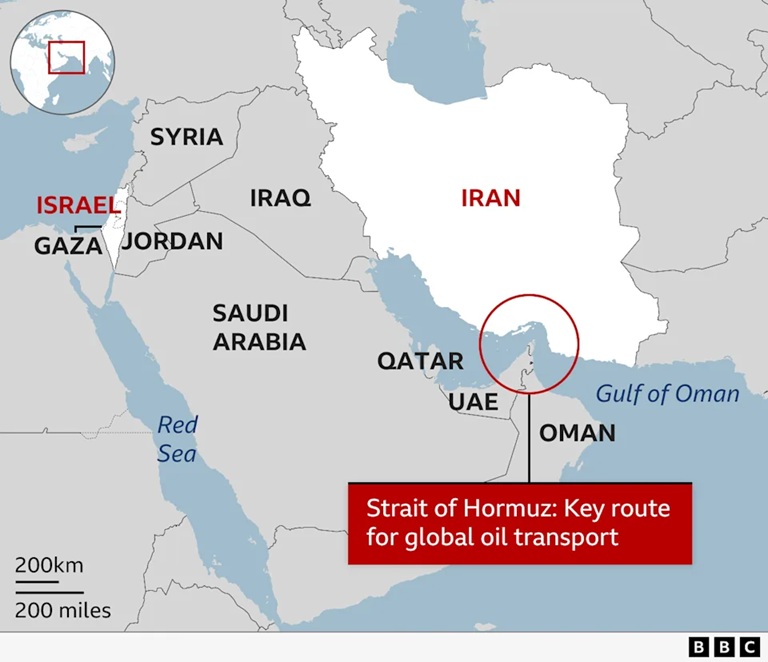
The market is now starting to base in structural adjustments. Larry Fink, CEO of BlackRock, warned a sustained oil price above $100—and potentially closer to $150—would have profound consequences for the global economy. The concern is not just the price of oil itself, but the fragility of the system around it: the risk to the Strait of Hormuz, rising insurance costs, higher transit costs, the other products the region produces like fertilizer and the cascading affect on global trade.
The implication is clear. There is a good chance of a global recession and there is a very good chance of a UK recession due in part to its strategic vulnerabilities, fragile energy policy, fiscal policy mistakes and supply side over regulation.
Context is clearer
In Part 2, I argued that the initial transmission mechanism from this conflict into the housing system was through bond markets and the cost of money. Gilt yields moved. Mortgage rates followed. Margins tightened. That was the first shock.
What is now becoming clear is that a second, equally significant transmission is underway. According to the Construction Product Association’s Noble Francis, using data from what happened after Ukraine, if oil remains above $100 per barrel for two months, construction product prices could rise by a further 6–8%. If sustained for three to four months, that increases to around 12%. That sits on top of a base of price increases which are already between 30-40% higher than 2020.
UK manufacturers are particularly exposed according to Francis. Industrial energy costs are around 60% higher than in comparable economies and already account for up to a third of total costs for some heavyside products. Some of this may be hedged in the short term, but it will feed through.
UK growth was already weak. With sustained energy price movements, we will hit negative territory very quickly. Investors will pause, developers will delay and buyers will step back.
The next market upset is May elections but it is also an opportunity
All is not well in the Labour party and Labour governs London. The Temporary Measures package, a welcome step, has not been widely well received by those on the soft and hard left. The document is Guidance, many elected Members may choose to ignore it.
At the same time, chronic under resourcing, NIMBY and de-growther attitudes have proliferated across the London local polity since Jeremy Corbyn’s rise and fall. More and more London Councils are becoming unmanageable. The latest to switch out the lights is Hackney where a Green wave is expected in May and effective decision-making processes have broken down since the loss of Phil Glanville.
We are moving into a critical phase for London. House building is on its knees. If this phase is misread—if cost-driven viability pressure is interpreted as behaviour rather than arithmetic—then the response will be predictable. More calls for rent control, more attempts to extract value from a system where that value is already being eroded and of course resultant deadlock. Policy based on scarcity, already the driving force of London’s planning framework, will become self-reinforcing.
However, the Khan Mayoralty is established and the Temporary Measures give him new powers to call in smaller schemes. With Labour breaking down at a Borough level, we could expect a Mayor with a keen eye on legacy to face in more than he ever has on housing delivery. The Mayor will need more fiscal support from Government but if he plays his cards right, that will be forthcoming. He is after all, King in the South and Starmer has been courting him; so will others.
If he can show vision, see off NIMBY opposition and de-growther innumeracy both within his party and outside after May, there is still a chance to protect housing supply. A Mayoralty which has displayed limited interest in housing for the last 6 years, may suddenly become one with a lazer focus and resolve.