
There was much relief when a ceasefire of sorts was announced earlier this week. But it doesn’t take a career in the Services to see that this conflict is not resolving cleanly for the United States and for the world. Initiated with unclear objectives, the US campaign has burned through significant resources targeting AI-identified assets—some of which now appear to have been Iranian decoys. The human cost is incalculable.
Weeks in, the Iranian regime remains intact and, by most accounts, better prepared than senior US leadership, had been led to believe. Prediction markets are now assigning only a minimal probability to regime collapse in the near term.
What was suppose to be a contained intervention has drifted into something more complex—and more entrenched. The worst-case scenarios that were dismissed at the outset are now beginning to materialise.
At the start of the conflict, escalation risks were widely downplayed. Three in particular now look less theoretical. First, disruption to critical infrastructure across the Middle East. The region produces a significant share of the world’s desalinated water, and that system is now under pressure having been targeted by both sides in drone assaults.
Second, damage to supply chains—oil refining, fertiliser production and logistics. These affects are now feeding directly into global pricing. Brent crude continues to sit comfortably above £100$ a barrel at the time of writing this. The second order effects will be felt soon.
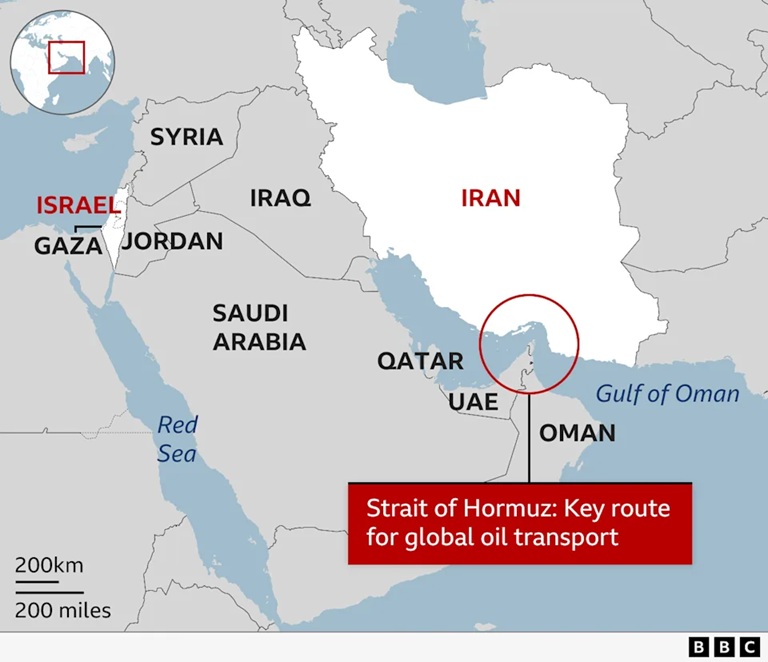
Third, control of the Strait of Hormuz. The threat of disruption has translated into the oil equivalent of a ransom strip with clear implications for global energy markets. We now appear to have a tolling system coming into place with the price reported around a cool million a ship.
Transmission effects
In previous pieces, I set out the first two transmission mechanisms into housing. The first was capital markets. Gilt yields repriced, mortgage rates followed and margins tightened.
The second was cost inflation. Energy feeds into materials, logistics and construction. As prices rise, viability compresses and schemes stall.
A third effect is now emerging: investment behaviour. Capital doesn’t just price risk. It moves.
While the US may claim strategic energy independence from Middle Eastern oil, it remains deeply connected to its global capital outflows. Those flows are now shifting, with capital being drawn back toward the region to stabilise infrastructure and repair damage.
Markets reliant on that capital are likely to feel the absence. London is one of them. The assumption underpinning much UK housing policy is capital remains broadly available, even if conditions fluctuate. That assumption is in my view a foundational error.
At the same time, London’s delivery model has evolved. A growing share of supply depends on complex, structured deals—often on public land, agreed years in advance and frequently reliant on relatively benign assumptions.
These schemes have already faced delays through Gateway 2 and increasingly complex planning processes. Many are coming through the other end of an elongated process to find the world in a different place. Schemes conceived in one economic environment are reaching delivery in another just when we may see a capital markets retrenchment.
Long development cycles mean assumptions quickly become outdated. Risk compounds. Capital becomes more cautious. A system that cannot adjust quickly becomes, in effect, uninvestable.
Back to Iran
It’s very hard to make long term capital decisions when the Leader of the free world fires out increasingly angry Truth Social posts interspersed with commentary on regional golfing competitions. It does appear the ceasefire will lead into a wider stalemate perhaps similar to the Korean War and the 38th Parallel. That may well be the best case now.
Iran has purportedly undergrounded much of its defence assets and they cannot be easily hit. Intelligence reports suggest Iran has much more arsenal in reserve than originally thought.
Meanwhile, whilst at a human level everyone was relieved by the rescue of two airmen over the weekend, one could also not help but notice the collateral damage left behind. By the end of the mission; which may have been to prepare for ground troop insertion; and after the chutzpa of the press conference had faded, the United States had lost an F-15E strike fighter, up to 4 helicopters and an A10 Thunderbolt. That’s a lot of hardware. What was actually going on will of course will come out in the wash.
What is clear is the United States isn’t able to exert the influence over global affairs it thought it might. The world is more unstable and the UK must look to grow and strengthen its economy in and an increasingly turbulent international context. That will require tough decisions and a more pragmatic approach to economic management going forward.