
Part 1 of a deep dive propviews on why the London planning framework has shut down land supply for new homes
To understand why London’s land market has more or less shut down, you have to go back to a High Court case eight years ago. It has been cited more times than almost any other in London’s inner planning circles but rarely mentioned in the mainstream media as one of the root causes for the brownfield emergency.
It is invoked by local authorities to justify lowering benchmark land values. It is used by the London Mayor’s office to legitimise near-blanket rejection of market evidence.
It is treated by housing campaigners as a landmark vindication of land value capture policies. But when it was published, it was also welcomed by many of those in the development sector including me. It was perceived as a judgement that might end a boom and bust market and ensure development could deliver positive outcomes for all.
The case is Parkhurst Road Ltd v Secretary of State [2018] EWHC 991. The judgement could have had a positive influence on London housing supply and affordable housing.
But I am going to show the judgement was cherry picked, for want of a better turn of phrase. Instead of taking the judgement in full and reflecting a more workable policy framework which could enable a sustainable supply of housing land, policy makers selectively ignored the wider points in favour of a narrow definition to clamp down hard on developers and the land market.
The result: we are now witnessing a generational drop in housing supply in a global city. But it didn’t have to be like this. If you want to understand the collapse then you have to know the back story.
Read on in this two part propviews deep dive.
What happened – the background to the landmark case
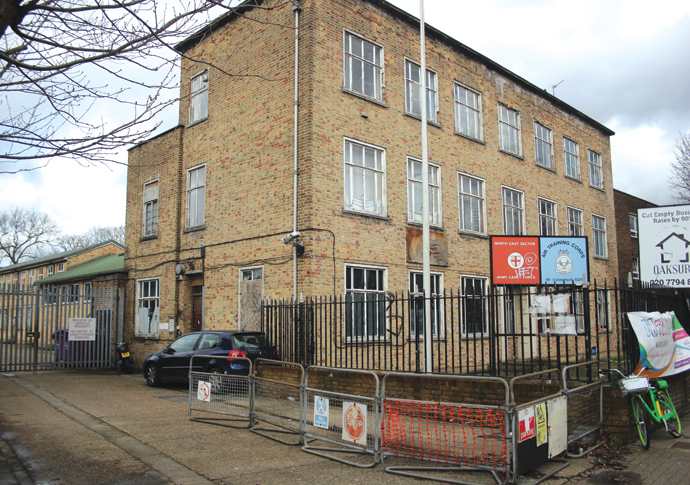
In 2013, developer Parkhurst Road Limited won a competitive bidding process to buy a former Territorial Army site in Holloway from the Ministry of Defence for £13.25 million. The site was in the London Borough of Islington.
Islington’s affordable housing policy required 50% affordable across the borough. The developer’s viability case said it could offer 14% as affordable.
The application for 150 homes, reduced to 116 during the process, was refused by Islington in 2014. It was appealed and that appeal was dismissed on design grounds in September 2015 following a six day inquiry.
Islington had also contested the benchmark land value being the price paid – £13.25 million but the Inspector was satisfied with the market comparable approach the developer had used. The Council reserved its position.
The developer came back in again with a smaller scheme in 2016 for 96 homes. The developer addressed the design issues but didn’t offer any affordable this time. The application was refused again and appealed again.
This time, Islington fought the appeal on viability grounds as its primary argument, not design. The appeal took place in 2017, again an inquiry. The developer, PRL argued for a reduced benchmark land value of £11.9 million and proposed 10% affordable. Islington argued the land value was £6.75 mill and the affordable offer could be 34%.
The Council’s case was based on an EUV+ valuation approach. PRL argued using market comparables as it had done the first time. The Inspector, a different one to the first appeal, rejected PRL’s viability case entirely, and dismissed the appeal.
PRL then went further: to the High Court and Justice Holgate an acknowledged land expert presided over the case.
The judgment that broke the circulatory problem
Mr Justice Holgate was careful and precise. He dismissed the claim and ultimately he was right to. A very strong argument that Islington made was that if you allow market evidence to be the determiner of benchmark land value you create a circulatory problem.
The circularity problem is this: if a developer buys a site at a price that assumes a low level of affordable housing — either because they deliberately downplayed the policy requirement or because they were simply optimistic about what they could negotiate away — and then uses that purchase price as the benchmark land value in their viability assessment, the assessment will inevitably conclude that more affordable housing makes the scheme unviable. The inflated land cost, itself the product of ignoring affordable housing policy, is then used as the justification for ignoring affordable housing policy. The assumption creates the conclusion, and the conclusion validates the assumption.
Islington’s case was essentially that PRL had done exactly this — paid £13.25m in a competitive bidding process without adequately accounting for the 50% affordable housing requirement, and then presented the resulting land cost as an immovable fixed input that made policy compliance impossible. The council’s argument, which the Inspector ultimately accepted, was that you cannot use a price that was inflated by discounting policy obligations as the basis for arguing that those same policy obligations make development unviable.
I agree with the general thrust of the Islington argument. What I fundamentally disagree with is the approach that has taken place subsequently as it has made it nigh on impossible to bring housing supply forward. I will explain why.
The Mayor’s SPG: before the judgment, after the judgment
The Mayor’s Affordable Housing and Viability SPG — which remains the operative London-wide document to this day — was published in August 2017, nine months before Parkhurst was finally decided. However, the team that drove the SPG had lived and breathed Parkhurst. Remember, Parkhurst had been rolling thunder for a few years with protracted appeals and challenges.
The SPG pre-empted the final judgement and bases its justification on the circulatory problem as does the its latter sister document, the LPG which I will talk more of in part 2. It has been treated ever since as if it flows naturally from Holgate’s reasoning.
The SPG caps the EUV premium at 10-30%. It treats market value approaches as inadmissible except in exceptional circumstances that in practice are almost impossible to meet.
On alternative use value it goes further still — the Mayor will only accept AUV where there is an existing implementable permission for that alternative use, or where it can be demonstrated the alternative would fully comply with development plan policies. And where AUV is accepted, no additional competitive return premium is required. The landowner gets the bare minimum and nothing more.
What Holgate actually said
Holgate did not write a blank cheque for EUV+ methodology. He did not say market evidence was irrelevant. He did not say landowners should accept whatever number a council’s viability consultant produces. Read the judgment and you find something very different to what the Mayor of London has based its foundational viability framework on.
On formulaic EUV+ application, Holgate was explicit: “It is understandable why developers and landowners may argue against local policy statements that BLV should simply conform to an ‘EUV plus a percentage’ basis of valuation… Some adherents appear to be promoting a formulaic application of ‘EUV plus.’ But as the RICS advised its members in its 2012 Guidance Note, an uplift of between 10 and 40% on existing use value is an arbitrary number and the method does not reflect the workings of the market.”
So Justice Holgate in Parkhurst actually warned against formulaic EUV+ application. But in Parkhurst’s name, formulaic EUV+ application has been rolled out across London.
EUV should actually have flex
There is also a detail from the Parkhurst case itself that almost never gets cited. Islington — the council that fought and won the case — accepted in its own closing submissions that a benchmark land value of £6.75 million represented a competitive return because it was approximately nine times the existing use value of the site. Nine times. Not EUV plus 20%. Not EUV plus 30%. Nine times EUV — and that was Islington’s number, not the developer’s.
The very council whose victory is used to justify suppressing land values accepted an 800% premium above EUV as reasonable on this specific site. You won’t find that quoted in many viability assessments these days.
The competitive return nobody mentions
Holgate was also clear that a competitive return must be allowed not just for the developer but for the landowner. He didn’t define what competitive means. That was deliberate — land markets are too heterogeneous for a single number. A competitive return in Rotherham is not the same as one in Islington. He left it as a matter of judgment for each case.
What has followed is the precise opposite of that approach. The 2018 NPPF viability guidance and the Mayor’s SPG attempted to codify what Holgate carefully left undefined. Turning a principled concept into a prescribed formula is not implementing a judgment. It is exploiting one.
It was about one site
Holgate also made clear that his reasoning was site-specific. The Parkhurst site had a debateable existing use value — a former military centre. He noted explicitly that in some cases a competitive return may need to give a landowner an incentive that exceeds existing use value or alternative use value. That parenthetical matters enormously. It means the Parkhurst methodology cannot simply be transplanted onto a retail unit, an office building, or an industrial site with genuine alternative use value. Holgate said so. Nobody listened.
The case PRL lost on evidence, not on principle
It is also worth understanding precisely why PRL’s viability case was rejected. The most significant factor was one of PRL’s own making. When it bid £13.25m for the site in 2013, it prepared a viability appraisal to support that bid. That document would have revealed the affordable housing and planning obligation assumptions underpinning the price. PRL never produced it — at either inquiry. Holgate noted it was “plainly of direct relevance” and that it might have revealed PRL had assumed a larger scheme than the 96 units eventually proposed, which would have explained part of the price premium.
That was a evidential gap. The Inspector could not assess whether the purchase price reflected genuine market conditions or overly optimistic assumptions about development capacity. The entire foundation of PRL’s case — that the price paid was a reliable market signal — was undermined by its own failure to disclose the document that would have tested that claim. It was noted, in a future case where a developer produces that appraisal and demonstrates that the price paid was based on policy-compliant assumptions, the outcome could have been very different. I will come back to this point in part 2.
Two Inspectors, same site, opposite conclusions
One further detail rarely mentioned. The 2015 Inspector — on broadly similar evidence — accepted PRL’s market evidence and found £13.26m to be an appropriate BLV. The 2017 Inspector, on a reconsidered case, reached the opposite conclusion. Holgate acknowledged this directly and noted it illustrated why uncertainty in viability assessment produces adversarial and inefficient outcomes.
The point is important. Parkhurst is cited as settling a question. It didn’t, well at least in the context of viability at the time. Two experienced Inspectors on the same site in the same borough reached diametrically opposite conclusions on viability within two years of each other.
The conclusion everyone ignores
Perhaps the most important passage in the entire judgment is the conclusion, where Holgate writes that “realism” is needed when market evidence and policy requirements are applied together, and that a judgment may need to be made on relaxing one or more planning requirements where a properly conducted viability case demonstrates non-viability. He also warned explicitly against policy attempting to “buck” the market — his words — and drew a distinction between policy influencing market value, which is legitimate, and policy that disregards market values arrived at in genuine arm’s length transactions, which is not.
He also noted that RICS guidance on accepted professional practice “ought to command great respect in the planning process unless there is a sound reason to the contrary” — and that RICS itself had said EUV+ does not reflect the workings of the market. And by the way RICS gave a range of up to 40+ on the EUV premium in its 2012 document which was the extant guidance at the time.
Holgate concluded by hoping the High Court would not be asked again to wade through detailed valuation material of this kind. What he wanted was better professional guidance and more flexible, realistic policy. What he got was the opposite.
The result
London’s land market has effectively closed. Sites are not transacting. Landowners are not selling at values the EUV+ model produces because those values bear no relationship to what they could rationally expect from their asset. The result is not more affordable housing. It is less development, less supply, and a planning system that has mistaken process for outcome.
I am not here to cry over landowners. But I am a realist, like I think Justice Holgate. You can’t expect landowners to receive nothing for land.
Parkhurst was a judgment about one former military site in one London borough, decided on a specific set of facts, by a judge who explicitly warned against the formulaic application of the methodology he was endorsing in that specific case, and let the decision stand in part because the developer had failed to produce its own key evidence. It was never intended as a universal template. Holgate told us that clearly.
The policy world chose not to listen — and London has tanked its supply of housing land.
Postscript: In part 2 I will get into it in even more detail because this is important to how we resurrect the system from here in the next London Plan and change the debate.