
The architect’s new job is not to produce. It’s to know what problem you’re actually trying to solve.
Rick Rubin does not read music. He does not operate a recording console. He co-founded Def Jam Recordings in a New York University dormitory room and went on to become, in MTV’s words, “the most important producer of the last 20 years.” His credits run from Johnny Cash to Adele, from the Beastie Boys to Metallica.
When asked how he does it, Rubin is consistent in his answer. He claims taste. The ability to know what is good, what is true to an artist, what should stay and what should go. There is no “Rubin sound.” His job is to get the best out of the artist, to make it the artist’s record, not to leave his own mark on it.
I’ve been thinking about this a lot in the context of what AI is doing to architecture.
For most of the last century, a significant part of an architect’s value was technical. We held knowledge that clients didn’t have. We understood how buildings went together, how planning policy worked, how to translate a brief into a set of drawings that would get planning then a contractor could build from.
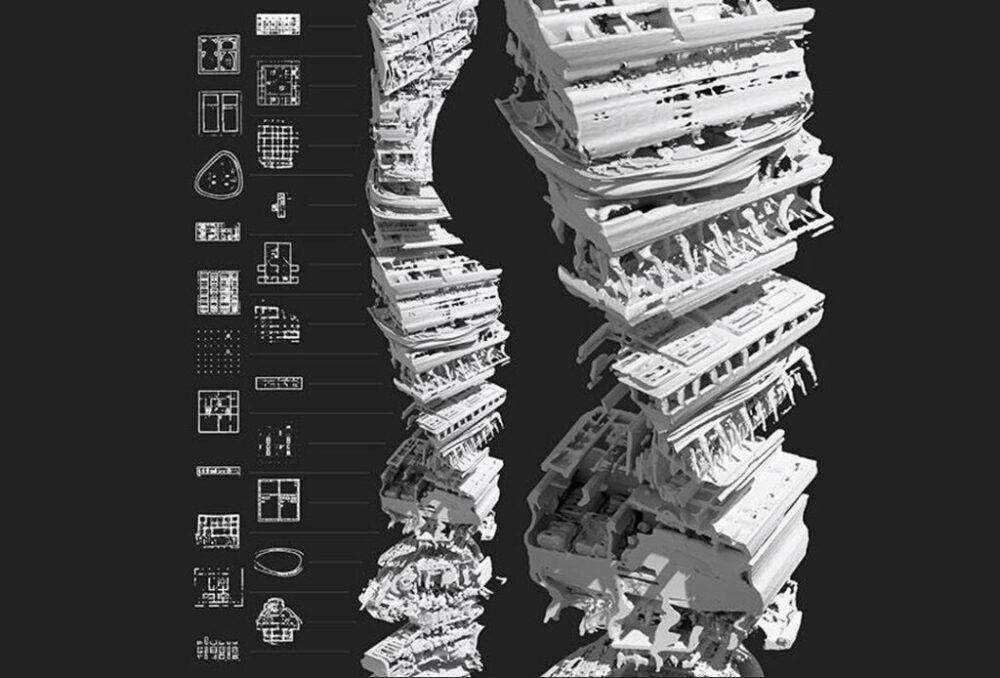
AI is/ will absorb a large part of that knowledge/ skill space. Not perfectly, and not yet completely, but the direction of travel is clear. Tasks that once required hours of skilled professional time, from generating massing options, to producing initial design iterations, to taking a massing model into full technical detail can now be done in minutes/ hours with the right tools.
So if technical production is no longer our primary job, what is?
The easy answer is taste. The Rick Rubin answer. And I think there is something in it. Architects who have spent careers developing a genuine design sensibility, who know what a good building feels like before it is built, will always have something that a language model cannot replicate.
But taste alone is too passive. Taste is a quality you bring to a solution. What I think the best architects actually offer is something more active, and more valuable to developers: the ability to correctly identify the problem before anyone starts trying to solve it.
Problem posing, not just problem solving
AI is genuinely impressive at solving defined problems. Give it a clear brief, a set of constraints, and a target output, and it will generate options faster and in greater volume than any team of architects. This capability is only going to improve.

What AI is poor at is knowing which problem is worth solving. That requires understanding context, relationships, and the gap between what a client says they want and what they actually need. Or the subjective grey space between what a planning policy says and what we know a politician actually wants.
It requires the kind of conversation that only happens when an architect takes the briefing process seriously. I have seen lots of ai early stage design tools that can push and pull around a site making different shapes, but I don’t see how any of those shapes would be right if no one had dug really deep in the brief
In practice, this means slowing down at the start. Not rushing to design solutions, but spending real time understanding what a developer is actually trying to achieve. What does success look like?
This is the architect’s job now. Not to produce drawings. To pose the right problem. Then to use every available tool, including AI, to make the case for the best answer
The planning and building regulations system in England produces a remarkably uniform output. The same policy framework, the same space standards, the same fire and accessibility requirements, applied consistently across the country, tends to produce the same flat. The two-bed apartment in London Bridge and the two-bed apartment in Bridgend are more similar than they should be. Not identical, but closer than the difference in their contexts, land values, demographics, and transport infrastructure would suggest they ought to be.
This is partly a resources problem. Making a compelling case for a more bespoke response to a specific site requires evidence, and assembling that evidence takes time and costs money that many projects cannot absorb in the early stages. AI changes that calculation.
The data that could support a genuinely site-specific argument has always existed. Demographic profiles, household formation rates, rental demand by bedroom size, transport accessibility scores, comparable planning decisions in similar local authorities, the relationship between unit mix and values in comparable schemes. The problem has been the time required to gather, process, and synthesise it into a coherent argument.
AI can now do much of that processing. An architect who knows how to ask the right questions of the right data sets can build a compelling, evidence-based case for a different approach in the time it previously took to commission a market report. That case, presented well at pre-application stage, is the difference between a planning officer defaulting to policy and a planning officer engaging with the specific conditions of a specific site.
If you are appointing an architect primarily for their ability to produce drawings, you are solving the wrong problem. Production is becoming a commodity. The value is in the thinking that precedes it.
The briefing process is where that value is created or lost. A developer who invests properly in briefing, who treats the early conversations with their architect as a genuine strategic exercise rather than a formality before design begins, will end up with a scheme that is better calibrated to its site, its market, and its planning context.
And an architect who is using AI to build the evidentiary case for that scheme, rather than just to accelerate drawing production, is giving their client something that was genuinely difficult to access five years ago.
Rubin never learned to play an instrument. But he knew, better than almost anyone in the industry, what a great record sounded like and what it needed. That is the version of the architect’s role that is worth investing in.
Oliver is an architect and co-founder of Ackroyd Lowrie. Previous to this, he spent 10 years working at Architype where he was responsible for developing a modular, timber-framed construction system that was used by several London Boroughs to deliver new Primary Schools and Nurseries. He also co-hosts the Urban Forecasts Podcast show. Urban Forecast – Podcast – Apple Podcasts