

Part 1 of this series established that the conclusions from Parkhurst Road Ltd v Secretary of State [2018] EWHC 991 have been cherry picked.
Mr Justice Holgate warned against formulaic EUV+ application, required a competitive return for landowners, and confined his endorsement of EUV+ to the specific and unusual facts of a single former military site. None of that made it into the policy framework that followed nationally and locally.
Part 2 examines how that happened. The story is not one of careless misinterpretation. It is one of deliberate political choices, a professional institution that failed at a critical moment, and a government that used a judicial vacuum to resolve a decade-old methodological dispute in favour of one side. The result is a viability regime that has suppressed London’s land market and contributed materially to the pipeline collapse that both central government and the Mayor have now declared a housing emergency.
Part 3 will look at the other side of the case. There were arguments in favour of a more controlled approach and my central contention is not that the market should drive land values without reference to planning policy. It is that policy makers have over corrected. I will also provide some more side bar context and discussion points.
Part 2
The row that preceded Parkhurst
To understand what happened after Parkhurst, you need to understand what happened before it. In June 2012, the Local Housing Delivery Group — chaired by Sir John Harman — published guidance titled “Viability Testing Local Plans: Advice for Planning Practitioners.” The Harman Review concluded that the starting point for benchmark land value should be what became known as EUV+ — existing use value plus a premium, the precise figure to be determined locally with evidence. Harman did not prescribe a percentage. He required only that there be evidence the premium was sufficient to persuade landowners to sell.
Two months later, RICS published its own professional guidance. RICS took the opposite view. It argued that the only price at which a landowner could reasonably be expected to sell was the market value — the value at which a buyer and seller would transact at arm’s length, taking into account all circumstances of the site, comparable transactions, and relevant planning policies.
Both approaches had weaknesses. EUV+ was arbitrary and disconnected from market reality — a small uplift on a negligible EUV offers no meaningful incentive to sell. The market value approach suffered from the circularity problem: if comparable transactions were themselves inflated by developers discounting affordable housing requirements, using those transactions as evidence simply perpetuated the problem. Neither side could fully answer the other’s objections. The result was six years of methodological warfare fought out in planning inquiries and appeal hearings across London, with Inspectors reaching different conclusions on similar facts depending on which set of guidance they found more persuasive. Planning Authorities were being disempowered and there was a palpable sense of frustration across local government that the system was not delivering.
What is rarely acknowledged is that the Harman Review itself was considerably more nuanced than the policy framework built around it after the fact. Harman explicitly preserved a role for market values — recommending they be used as a “sense check” on threshold land values. He linked the competitive return concept to one that “would lead to a market transaction.” He noted that relocation costs — capital gains tax, stamp duty, professional fees — needed to be covered before there was any incentive to sell at all. And critically, he said the precise premium figure should be determined locally with evidence, not prescribed nationally. It was a practitioner convention that hardened into received wisdom and was then further reduced to 10-30% by the infamous 2017 SPG crackdown. Harman never put a number on it. Neither Harman nor Justice Holgate’s conclusions were faithfully implemented. Both were selectively harvested.
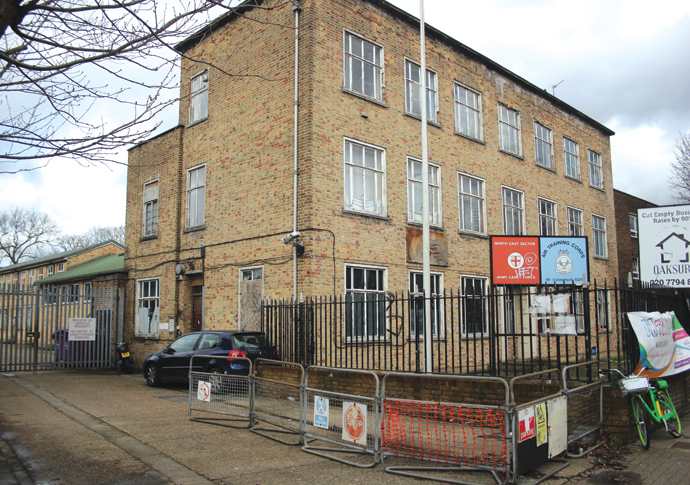
Parkhurst Road was the obvious test case. A former military site with a developer who had paid £13.25m without disclosing the viability appraisal that underpinned that bid. The methodological war had found its ideal battlefield. And with Holgate’s judgment, it seemed to find its resolution — or so the policy world chose to believe.
The SPG that came first
While the national policy debate played out and a judgement was being finalised, London had already moved. With a new Labour administration, one ex-City Hall officer told me a crackdown was ordered by James Murray, the freshly appointed Deputy Mayor and former Cabinet Member for Housing in Islington. Murray had observed Parkhurst play out and he had concluded that the London development sector needed a shakeup.
The Mayor’s Affordable Housing and Viability SPG — published in August 2017 was there to legitimise a tougher approach at City Hall. The SPG was not implementing Parkhurst. It pre-empted it and more importantly, it had war gamed it to ensure loopholes learnt by Islington through the process would be closed off.
Whilst most would agree the SPG went too far, there was a need to bring in a framework which enabled planning policy and land values to interact more effectively. And, as I mentioned earlier, there was a deep sense of frustration in local government over the way developers were perceived to be having it all their own way.
And so, nine months before the Parkhurst judgment — London had already embedded EUV+ as the near-universal default methodology for London. The SPG capped the premium at 10-30% above EUV, treated market value approaches as admissible only in exceptional circumstances requiring robust justification, and restricted alternative use value to cases where an existing implementable permission already existed. There would be nothing on capital gains tax and fees – all that would come off the premium.
This approach was out of sync at the time with national policy and of course, it was a Labour Mayoralty with a Conservative Government. There was a danger that Whitehall might intervene and close down City Hall’s approach as too restrictive.
The letter that set the tone
The ink was drying on the Parkhurst judgment when the political aircover arrived. In October 2018 — five months after Holgate’s decision — James Murray wrote an open letter to the President of RICS jointly with Islington Council.
The SPG was treated as though it flowed naturally from Holgate’s reasoning. A political choice made before the case was decided was reframed as a judicial implementation after it. That sleight of hand was masterful and the legitimacy was on the side of those who felt genuinely that the development sector was riding roughshod over policy.
Reading Murray’s letter in full, it is more measured than its subsequent political legacy suggests and indeed diverges somewhat from the policy spin in the press release and the media. Murray and Islington did not explicitly demand EUV+ be mandated. They called on RICS to engage with them and the planning profession to address conflicts of interest and asked for a meeting to agree a way forward. The letter correctly identified circularity as a genuine problem and fairly noted that some RICS members had misapplied the guidance to inflate benchmark land values.
But the letter subtly mischaracterised what Holgate had said. It stated that the judgment “dismisses the approach in the RICS guidance as it has been often misapplied in practice.” That is not quite right. Holgate criticised misapplication of the guidance by some adherents — he did not dismiss the guidance itself. He endorsed its own warning against formulaic EUV+ application and called for it to be updated and clarified. The letter conflated misapplication of the guidance with the guidance being inherently flawed — a significant elision that shaped everything that followed.
The letter also made a claim that deserves scrutiny. It argued that protracted viability disputes delayed housing delivery, citing the Parkhurst Road site sitting vacant for five years, and implied that clearer guidance would speed up the process. Seven years on, viability negotiations in London have become longer, more expensive and more adversarial than ever. The complexity industry — the ecosystem of viability consultants, planning lawyers and surveyors who profit from navigating the system — has grown, not shrunk. The promise of faster decisions was not delivered.
James Murray is now Chief Secretary to the Treasury — and crucially, the Treasury’s lead minister on infrastructure reform. The man who as Deputy Mayor of London lobbied RICS to tighten the viability framework in 2018 is now the second most senior Treasury official. That is not a coincidence to be glossed over. It is the political context within which the current emergency measures need to be understood.
The institution that blinked
RICS did not respond to the Murray letter by producing the balanced guidance update Holgate had called for. It did not respond at all in any meaningful sense. For two years after the judgment, the institution that had been explicitly invited by a High Court judge to revisit its professional guidance — in conjunction with government and the planning profession — produced nothing. RICS was said to be on the verge of publishing updated guidance but it didn’t get to the finish line before policy makers moved.
That silence was not neutral. In the vacuum, City Hall used the decision to protect the SPG’s integrity. And the Government gave them cover and to be fair why would politicians back greedy landowners and developers. At the time, the system was considered to be resilient enough to take it. No one foresaw that a combination of macros factors, demand side reductions and complexity of policy would bring down housing supply across a global city like London and lead to thousands of job losses.
The revised Planning Practice Guidance on viability was published in July 2018, writing EUV+ into national planning policy guidance. EUV+ does not appear in the NPPF itself — it was embedded in the accompanying PPG. But the timing was significant in another respect: paragraph 173 of the 2012 NPPF, which had explicitly required “competitive returns to a willing land owner and willing developer,” was quietly removed from the 2018 NPPF at the same moment.
The protection Holgate had cited was deleted the day EUV+ was codified. The RICS, having failed to shape the outcome through professional guidance, found itself having to fall in behind government policy instead. The institution that had championed market value methodology for six years effectively conceded the field.
RICS had been a key consultee in the Harman Review process. It had published its own competing guidance. It had the professional standing and technical expertise to produce a credible reconciliation of the two approaches. But it missed the window. The consequences have been borne by the London land market ever since — and this paralysis is likely to go national with the latest iteration of the NPPF.
The market begins to fail
The costs and the deadlock the SPG created actually started to become visible before the pipeline collapsed to sub 10,000 homes in 2025. Research published by Lichfields September 2020 — based on 60 London planning permissions granted in the three years to April 2020 — started to identify conflict and deadlock spreading across the system.
In 75% of cases, affordable housing and viability was one of the main issues in determination. A third of cases were delayed specifically by protracted debates over land value. The average determination period was 60 weeks — nearly five times the statutory requirement. S106 negotiations alone added a further 23 weeks after committee decision. Only one of the 60 permissions was determined within the statutory 13-week period. On the small and medium sites that London desperately needs to diversify its housing supply away from volume housebuilders, the viability regime was already acting as a systematic brake on delivery. That was 2020, two years after the PPG embedded EUV+. It has got considerably worse since.
The draft LPG: a system designed to produce zero
If the 2017 SPG already exceeded what Parkhurst sanctioned, the direction of travel since has been towards further tightening still. With viability moving to enforcement, City Hall got a taste for forcing investment and increasingly marginal development projects into deadlock with the aim of driving up affordable housing numbers. This spread across the Boroughs. As witnessed, it hit the SME developers harder at first because they could not threshold chase by going taller and bulkier to pay for underfunded affordable housing.
In May 2023, the GLA published a consultation draft of a new Development Viability London Plan Guidance document, intended to replace the 2017 SPG. It is important to be clear: this document was never adopted. The consultation closed in July 2023 and a final version has never materialised. The industry responses were evidently damaging enough to stall it and of course the second stairwell debacle which came at the same time, effectively ended the ability of even extremely large schemes to cross subsidise affordable supply meaningfully.
But the draft reveals where the GLA wanted to go — and reading it in full is a sobering exercise. The draft LPG’s approach to benchmark land value is set out in section 4.4. It is worth examining in detail because it represents the logical endpoint of the post-Parkhurst trajectory.
Paragraph 4.4.4 states categorically: “Under no circumstances should price paid be used as the basis for the BLV.” No qualification. No room for evidential judgment. Holgate himself attached “moderate weight” to the purchase price in Parkhurst. The draft LPG would have made that impermissible.
Paragraph 4.4.8 states that where existing buildings are in poor condition or there is limited demand, the EUV is expected to be “nil or very low.” Paragraph 4.4.9 then requires that any value attributed to existing buildings be supported by a year-by-year projection of major repairs and refurbishment costs over at least a 30-year period, informed by a detailed planned preventive maintenance report from a qualified surveyor. The practical effect is to systematically drive EUV toward zero on any site with ageing buildings — which in London means almost every brownfield site of significance. A 1970s office block, an ageing industrial unit, a tired retail parade — all face a methodology engineered to tell the landowner their asset is worthless.
Paragraph 4.4.11 adds that any premium above EUV “should allow the development to be policy-compliant” — a circular definition that constrains the landowner’s return by reference to the very policy outcome the premium is supposed to be testing. Paragraph 4.4.16 states that premiums can only be informed by BLVs accepted on other policy-compliant schemes — a closed loop that excludes market reality entirely and can only ever replicate its own assumptions. Paragraph 4.4.17 relegates land transactions to a cross-check only.
The cumulative effect of these provisions is a system with a single destination: zero. EUV driven to nil by 30-year maintenance projections. Premium constrained by policy compliance requirements. Market evidence excluded. Comparable BLVs drawn only from other assessments produced by the same methodology. No price paid evidence. No genuine market signal permitted to enter the calculation at any point.
The question nobody appears to have asked during the drafting of this document is the most basic one in economics: who sells at zero? The answer is nobody. Landowners don’t sell. Sites don’t come forward. Planning permissions aren’t granted. Affordable housing isn’t built. A methodology designed to extract the maximum affordable housing from development had been taken to the point where it prevented the development that would deliver any housing at all.
The cobra effect
There is a famous policy parable known as the cobra effect. Under British colonial rule in India, the government offered a bounty for dead cobras to reduce the snake population. Enterprising locals began breeding cobras to collect the bounty. When the scheme was cancelled, the breeders released their now-worthless snakes, making the problem considerably worse than before the policy began. The mechanism designed to solve the problem became the problem.
The post-Parkhurst viability regime is a cobra effect in action. A methodology designed to deliver more affordable housing by suppressing benchmark land values has been applied with such rigidity that landowners have stopped bringing sites forward. The result is not more affordable housing. It is less development overall, fewer sites in the pipeline, and a housing emergency that has required the government to announce emergency measures — including relaxation of the very affordable housing requirements the methodology was designed to protect.
Rational actors responded rationally to the incentives the system created. Landowners did not break the system. They responded to it. The policy failure is not theirs.
The ratchet with no release mechanism
That the draft LPG was never adopted is some comfort. That it was produced at all — and that GLA viability officers have reportedly applied its principles informally regardless — tells you everything about the direction of travel. Each turn of the policy screw since 2017 has moved in one direction. The 2017 SPG tightened on the RICS 2012 guidance. The 2018 PPG tightened on the SPG. The 2023 draft LPG attempted to go further still. There is no counterpart mechanism. No release valve. No point where an overly suppressed BLV triggers a correction.
This is the defining characteristic of the regime that emerged from Parkhurst. It is a ratchet. It only turns one way. And it has been turning in one direction for seven years while London’s development pipeline has progressively closed. And when a developer does buy a site to try and keep their business going rather than close the shutters, they are of course accused of overpaying because the benchmark land values are so suppressed that everything looks like overpaying. The system is febrile. Can you blame the housebuilders and the developers for swerving the London region?
The question that now needs answering
The emergency measures announced by MHCLG and the Mayor represent an implicit acknowledgment that the system has failed. Reducing the Fast Track threshold from 35% to 20%, relaxing CIL, loosening affordable housing requirements on stalled schemes — these are not the actions of a government confident in its viability framework. They are the actions of a government trying to undo, at speed and under political pressure, consequences it did not anticipate.
But emergency measures are not a methodology reset. They are a sticking plaster on a structural wound. The underlying framework — EUV+ as near-universal default, market evidence excluded or demoted, premiums constrained by circular definitions, AUV restricted to cases with existing permissions — remains intact. The ratchet has not been released. It has merely been paused.
Holgate told us in 2018 what was needed: a balanced reconciliation of market reality and policy requirements, built on proper professional guidance, with realism applied at every stage. Seven years later, that reconciliation has still not happened. The question is whether there will be a genuine reset now — with the sector faced with Armageddon — or whether policymakers will simply produce a more sophisticated version of the same ratchet.
Part 3 will be a wash-up of some of the debates and sidebar conversations that come out of this.
It’s time we as a sector had a debate about what is a sensible balance. No one is arguing for a complete reset but equally there is a great deal of merit in finding a more sensible balance. Otherwise, there is no point in a London Plan with a target of over 80,000 homes per annum. The framework as it currently stands won’t achieve 10,000.