

What the planning blogosphere’s best minds think is coming — and where I land on all this good stuff
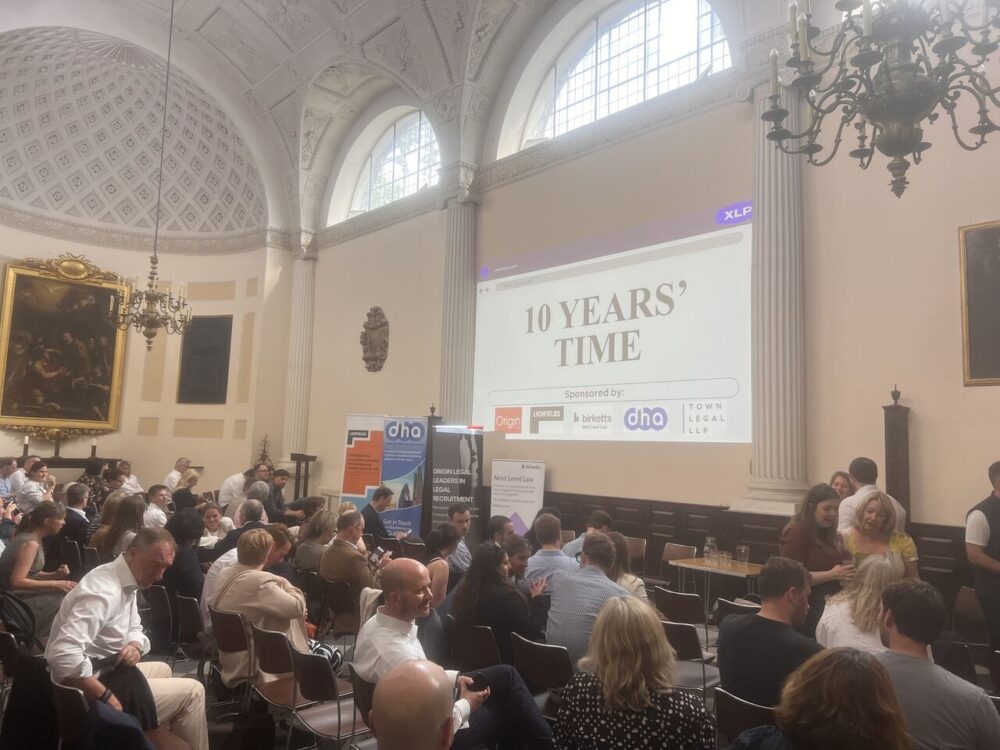
On Tuesday evening I was thrilled to join the celebration of Simon Ricketts’ ten-year anniversary of Simonicity — one of the most consistently authoritative planning law blogs in the country. Simon gathered some of the sector’s most prominent thinkers for a genuine blue-skies discussion about what the planning world might look like in 2036. The event raised money for XLP, the outstanding London youth charity whose work with young people across some of the capital’s most deprived communities deserves far more attention than it gets. If you haven’t come across them, look them up.
The panel — Angus Walker, Hashi Mohamed, Catriona Riddell, Nicola Gooch, Zack Simons KC, Sam Stafford, Philip Barnes, and Jennie Baker — produced perspectives as varied as the formats they work in: blogs, podcasts, books, legal chambers, consultancy. Simon was very generous in handing me the microphone more times than I probably deserved! Here are my three big takeaways.
A shift to the centre
Strategic planning dominated the early discussion — its return, its scope, and whether local councillors actually want to keep making decisions on individual planning committees. Given the nature of the panel, the general view was that more structural change is needed. Localism has not delivered a sustainable housing supply. Too much political short-termism. Too many veto points.
My view: we are not yet at the stage where real change will happen — but we are closing in on a consensus. A more rules-based, zonal approach to planning, anchored by powerful city mayors with genuine strategic authority, is the direction of travel. The May 2026 local elections — which handed boroughs to administrations whose manifesto commitments are structurally incompatible with the government’s housing targets — have accelerated that debate. The question is whether the political will exists at national level to act on the consensus before the next election. I am not sure.
Big capital — and where it’s going
Judicial review challenges succeed only five percent of the time. But that is not the point. Their existence creates uncertainty, elongates the planning process, and reprices risk. The threat of JR is as damaging as its outcome.
There was debate about institutional capital and the so-called wall of money waiting to come back into UK real estate. My honest view: the wall exists, but it is going elsewhere. Capital allocation is flowing — into Spain, Portugal, and eastern European markets. That includes UK institutional capital. I won’t name the funds, but the evidence is clear.
The London planning system has been deeply damaging to the UK’s investment reputation. The GLA’s enforcement era, late stage reviews, the second stairwell U-turn — each episode added friction and uncertainty. Capital is not ideological. It goes where the risk/return calculus works. At the moment London and the UK built environment are asking too much and offering too little certainty in return.
My view is that we will get there — but only if we resolve the first point. A simpler, less veto-heavy system that doesn’t allow ideology to override good data and policy is the precondition for capital confidence. Without it, the wall stays elsewhere.
Tech and AI in planning
The discussion ranged widely across infrastructure, energy, and artificial intelligence. There is significant activity in the renewables space — but genuine concern that the UK remains underpowered against the energy demands of AI and the post-modern economy. A show of hands in the room suggested the majority of the audience has already adopted AI in some form in their working lives.
AI is an opportunity. It will also displace jobs — there is no honest way to argue otherwise. Those who embrace it will succeed. Three specific benefits I’d highlight for planning:
First, Local Plan adoption should speed up significantly as we harness better data. Faster plan adoption means faster housing and infrastructure delivery. That is a large prize. Second, better data allows us to evaluate what planning policy actually delivers — what works and what doesn’t — rather than relying on the assertion-based arguments that characterise too much of the current system. Third, for every AI-generated objection there is an AI-assisted rebuttal. Used correctly, agentic AI can be a shield as much as a weapon.
The risk is regulatory capture — a small number of powerful actors setting the rules of a fast-moving technology in their own interests. It sounds familiar. It is, in many ways, exactly what has happened to the UK planning system. We should not repeat that mistake with AI.
Let’s embrace the benefits. And let’s not let the perfect be the enemy of the transformative.
Thank you to Simon Ricketts for ten years of Simonicity and for contributing something the sector genuinely needs. And to XLP for the work they do every day for young Londoners who deserve far better than they get from the city’s housing market.