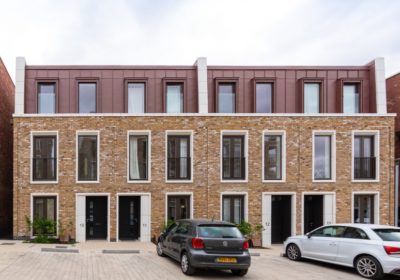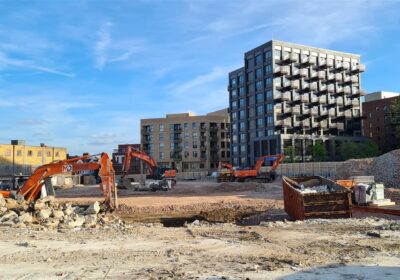


Last week we saw another sign of the decapitalisation of the London residential development market with Peabody walking away from a major regeneration of over 500 homes in Ealing.
We know the scale of the challenge in London. Thanks to Moilor, 281,000 planning permissions have been unimplemented across the Capital in schemes over 20 homes.
When people think about housing supply, they think of homes stuck in the system that are not moving. But what about the money invested and how are organisations large and small, like Peabody are dealing with what’s in front of them.
The price of plots
Getting planning permissions costs money. It ranges but blended, it can be anywhere between £5,000 – £10,000 a home to get a planning permission to engrossed S106 for a scheme mid-sized housing scheme.
There is then the small matter of land. Unfortunately, it’s not free. The dominant source of land for general housing supply is still from private ownership. Land premiums range and so do timings of payments.
Of course, not every housing scheme has a land value associated with it. Public sector land for example, if it is there to drive housing outcomes, will have very limited land consideration. As one senior London Borough Regeneration Director said to me, you attach a 50% affordable housing requirement and land value pretty much evaporates.
Heuristically, you can look at land value in a land per plot payment. The market ranged back when things were still semi functional. Plot prices might be as high as £100k in a central or zone 2 location with strong sales values and as low as £20-30k in more outer London locations.
I am going to be very conservative. In my experience, across the Greater London market, I would be thinking as a bottom end estimate there is at least £20k per unit invested in London’s development land pipeline i.e. the 281k consented homes.
Quick math: 20k multiplied by 281,000 gives you an idea of the capital – mainly equity, invested in Greater London, around £5bn. Many would suggest double that.
Mispricing a major economic shock
We know UK state has mispriced the magnitude of the UK’s brownfield emergency. After the tepid early planning reforms were announced, the OBR even awarded the Government an extra 0.2% growth headroom.
The temporary measures for London are still unclear. Everyone agrees that they have come too late no matter what tonic they offer. Will they even address the stuck consents?
Let’s be clear about the money invested in the system. Much of it is trapped.
Why are we not hearing more about it? Unlike when the market went down in 2008, the equity investment in London residential development is not fronted by High Street Banks. If you consider the UK’s finance system as a bundle of nerves, taking out a High Street Bank like RBS is the equivalent of an instant shock up the central nervous system.
After the GFC, High Street Banks moved out of direct development risk and down the risk curve. Yes they still lend to developers. But not without a significant cushion of equity.
That meant high density development needed fresh sources of capital. This has come from shadow banks, alternative lenders, investment funds and third-party equity sources. It is these pots of capital which are now trying to find a way out having been battered by hyper cost inflation, dampening demand and complex design requirements and programme elongations from the building safety agenda.
Why we should be worried
Just because the central nervous system is not directly impacted i.e. another RBS hasn’t gone down, it doesn’t mean we shouldn’t be watching how this plays out. Up to and perhaps more than £10bn of equity investment is having a tough time in the London market. The multiplier lost is perhaps three times if it was put into delivering sites and debt was raised and invested into development.
So what’s happening? Some capital is being quietly impaired, some of the sites are being exited to alternatives uses or staying as they are like perhaps the Peabody deal, but some of it is literally trapped. This is sending mild but increasingly acute shock waves and insolvencies down the supply chain. It’s a slow-moving car crash, but it is a crash nevertheless.
The tardiness of public policy intervention is hindering London’s reputation as a sensible place to invest. I think the London emergency is a brownfield emergency. In an emergency you need to be quick, commercial and willing to accept tradeoffs. For any measures to be effective, they must offer a sensible way out for private capital from a world that has changed materially since the money invested. Ideally that should be into delivering new homes.
What happens next?
There is still what I would term value add capital out there willing to invest in London but its more opportunistic then ever. The UK as a place to invest, and London residential development needs to work on its reputation. The core money is sitting out on the touchlines and will not come back until the playing field is a little more even.
I am worried that our policy makers are not taking this seriously. UK state doesn’t have the cash. It needs to encourage and cajole others and it must help them when the world changes. Otherwise, they will not come back.
Development is win and lose and that’s why it requires chunky margins. However, at the moment, for the majority it is lose, lose. That concerns me because I want to see a thriving housing market, not a dying one.