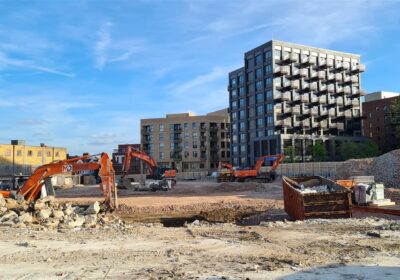


With a consultation imminent to address the London brownfield crisis, stem the job losses and relocations occurring across the residential development sector, propviews thought it was time to ask the big questions on everyone’s minds.
Thank you to all the people out there that volunteered views and thoughts to us privately both from the private and public sector when pulling this post together.
- Who is this actually for?
At propviews we have been consistent. The UK is in a brownfield development crisis and this extends beyond London.
We think a far simpler route would be to standardize and simplify brownfield high density development. The logic being if London isn’t working, arguably the most viable geographic area in the country, then you can bet your bottom dollar that nowhere else is either.
It gets more complicated when you read the Government’s statement. Is it for live applications, is it for future applications, or is it for past applications?
One major regeneration player with thousands of homes waiting consent told us that they were being advised the temporary measures were not for them. Instead, City Hall is briefing this is only for smaller, single-phase applications.
If that’s the case, it’s not clear in the written statement. Moreover, why the complexity? The sorting of different applicants and applications into different buckets seems a little obtuse. We think if the UK state wants to see spades in the ground then it needs to be a little less picky about who those spades belong to.
2. What about the past?
According to Molior, there are 281,000 plots with permission that are not in construction. They reckon the lion’s share are now unviable.
After the GFC, the Government brought in Section 106BA. There was recognition the playing field had changed. There was a need to protect capital invested and just get things going again.
We should care about capital investment. It’s not the plaything of politicians on the hard left and right who think it can be held to ransom. If capital is shredded we all get poorer and the UK state can do fewer things with less cash.
The industry is absolutely clear. A retrospective look at consented schemes is urgently required if these temporary measures are to be effective. Bring back Section 106BA.
3. Viability culture – will it be addressed?
Since 2016, viability skirmishes have erupted into open warfare with the unfortunate and largely unintentional politicization of the viability system. Many of the newer generation of London politicians, having grown up with the viability system as is, rather than as was. They now think it’s a horse trade to get closer to the policy objectives rather than a practical way of dealing with abnormals, costs and unlock housing delivery.
What many local politicians don’t realise is the current approach of using blended assumptions, often ill informed, rather than actual costs, has removed any political discretion they once had to get things through. With every pound under scrutiny, it is no longer possible to negotiate strategically with a local authority as everything is now at the behest of the viability assessor.
This is wrong. If you look at any Local Plan, there is a very broad set of viability numbers attached to the document. These numbers are ‘white label’ figures propping up in the most part unachievable planning policies. This by the way, was always the case.
Most of the data is inaccurate, time sealed and not reflective of individual site economics – and in fairness, how can it be? Sites differ in shape, size and circumstance.
Now, this approach would work if you are then inputting actual costs into a viability assessment. Like you used to be able to. However, you are not allowed to anymore. That means almost everything ends up with a late-stage review on assumptions that don’t reflect reality. This is not fundable.
The potential calamity of the current temporary measures is they may actually double down on the politicization of viability. If this happens, then the measures simply will not land, more jobs will be lost and our country will become poorer. We wait to see whether this will be reflected in the consultation. The industry I expect will respond forcibly.
4. What about alternative living and build to rent?
We have heard a lot about the temporary measures not addressing the lack of demand in the system. Rightly or wrongly, this is a mischaracterization of the debate and the type of housing we develop in our cities.
I am willing to bet if you opened a build to rent scheme in London tomorrow, it would be at full occupancy in a matter of months. The same is true of any purpose built shared living scheme. Yet the temporary measures primarily seem to be just about build to sell development. Build to rent gets a mention but it requires an RP involvement – not that easy and rules out most of the sector.
Propviews is pro-development. Unashamedly so. We support demand side measures if they are targeted at first time buyers but also think that we shouldn’t obsess about build to sell being the only way housing development gets done in cities.
Many of the detractors state that without help to buy, these measures cannot work. This ignores the build to rent sector and co-living. It also ignores retirement living and other alternative living uses.
The solution is to do everything that can be done to promote mid market rental homes. Will the temporary measures change tack and do more to support build to rent and co-living. If they do, it has more chance of success. If they don’t, then the naysayers will be right and the Government will almost inevitably set itself up for another round of help to buy as these measures will fail.
5. What comes after the temporary measures cease to exist?
It’s clear the Government is losing control of the game board. It has now joined the former Sunak Government in a world of political paralysis. In such an environment, the sector cannot expect too much.
Whilst the current Prime Minister has his faults, at propviews we think stability is better than instability and pragmatic politics is better than hard left and right ideology.
There may not be material reform to Britain’s public services until the end of this parliament but that is a trade off worth having rather than a shunt to hard left statism. The Budget and the May elections are now signature events for the health of UK plc.
If the Government can survive the next six or so months, we believe UK state must now engage seriously in what comes after the temporary measures. If anyone thinks that we can go back to the old system based on the fantasy land economics driven solely by private capital to deliver the country’s affordable housing needs then they should stop reading propviews…forever.
The country must find a better way of delivering housing. Funding our housing needs properly is the only way forward. There are ways of doing it but it is not going to be through land values alone.