
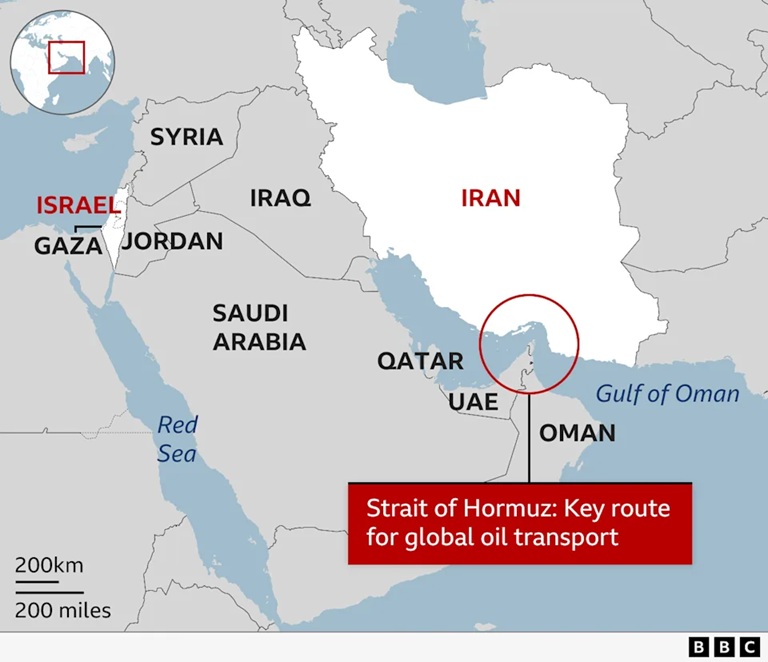

On Monday morning President Trump published on his Truth Social platform
“I AM PLEASE TO REPORT THAT THE UNITED STATES OF AMERICA, AND THE COUNTRY OF IRAN, HAVE HAD, OVER THE LAST TWO DAYS, VERY GOOD AND PRODUCTIVE CONVERSATIONS REGARDING A COMPLETE AND TOTAL RESOLUTION OF OUR HOSTILITIES IN THE MIDDLE EAST. BASED ON THE TENOR AND TONE OF THESE IN DEPTH, DETAILED, AND CONSTRUCTIVE CONVERSATIONS, WITCH WILL CONTINUE THROUGHOUT THE WEEK, I HAVE INSTRUCTED THE DEPARTMENT OF WAR TO POSTPONE ANY AND ALL MILITARY STRIKES AGAINST IRANIAN POWER PLANTS AND ENERGY INFRASTRUCTURE FOR A FIVE DAY PERIOD, SUBJECT TO THE SUCCESS OF THE ONGOING MEETINGS AND DISCUSSIONS. THANK YOU FOR YOUR ATTENTION TO THIS MATTER! PRESIDENT DONALD J. TRUMP”
As of writing this there has yet to be a formal acknowledgment from the Iranians. However, if there is a kernel of truth in what the American President has written then the establishment of productive diplomatic channels is very welcome. The United States needs an off ramp and so does UK Plc.
It is difficult to translate entirely what is happening in the Gulf to the state of the UK economy. However, none of it is going to be good. The question is not so much how bad, but how long will it be a bad for.
It is already clear that what began as a geopolitical shock centred on Iran and energy markets has now transmitted into something far more consequential for housing: the cost of money. The reaction in the gilt market has been sharp and immediate. Ten-year yields have moved to around 5 per cent — levels not seen since before the financial crisis — while markets are now pricing in as many as four Bank of England rate rises this year. The shift has been driven by renewed fears of energy-led inflation, but its implications extend well beyond the energy sector.
The significance of this repricing lies in how directly it feeds into the mechanics of development. Higher gilt yields translate quickly into higher borrowing costs, both for developers and for buyers. They reset investor expectations, alter exit values, and compress the margin for error across the entire delivery chain. Crucially, this is not a slow adjustment. Finance reprices almost in real time.
With Black Swans becoming more numerous it’s also evident the UK planning system needs more fundamental change. A planning system that seeks to impose viability certainties where none exists does not eliminate risk. It concentrates it. And when shocks occur — as they appear to be do so increasingly — the impact is not smoothed across the system but felt abruptly in delivery.
There is growing concern that the UK may be entering a period of stagflation, where inflation remains elevated even as growth weakens. For housing, this is a particularly difficult combination. Costs stay elevated, demand becomes more fragile – and it was already pretty weak – finance stays expensive.
The argument set out in part 1 stand: a planning system that caps profit is fundamentally incompatible with how housing delivery actually works. The system is not stable. It never has been.
Furthermore, a planning system which takes too long to process major investment decisions means that today’s assumptions look tired often before a deal is inked. Decisions which take too long means projects become uninvestable when the world moves at pace.
Finally, a system which is static, which locks decisions and gives no mechanism to reopen them make even good projects look risky. That is why I have argued for a return of Section 106BA as an interim measure is so important.
All this matters because much of the current policy thinking assumes the opposite. It assumes developer returns can be standardised, that inputs can be normalised, and that risk can be contained within a controlled framework which is static and politically open to capture. The appeal is obvious. But it only works in a world where the underlying variables behave predictably. It is text book thinking. It is for those who understand theories but do not work in practice.
We don’t know at this stage how Iran will play out. I might be wrong and in a few weeks we return to a relatively normal environment. I hope that’s right.
What we do know is that the UK regulatory mentality must change. That the world is now in a arms race. That there are a number of major international rivalries at play. A conflagration with China is not a long term prospect but potentially even in the next five year cycle. The UK economy must become more robust and it must grow. It needs to be more resilient and it needs to pay for what is coming. It cannot continue to limp and live off luxury thinking of the soft and harder left.
Instead, it will need to embrace real supply side reforms in energy, planning and other key sectors. It must think again about tax and where tax sits and it must embrace technology to manage welfare. Because if it doesn’t, we will continue to move punch drunk from one shock after another and that my friends is a recipe for extremism and populism.